Prepared Environment
Materials and routines are arranged so students can work with focus, order, and independence.
Student Choice
Children choose meaningful work within a structured environment and progress at an appropriate pace.
Hands-on Materials
Manipulatives help students move from concrete exploration toward abstract understanding.
Teacher as Guide
Teachers observe carefully, introduce lessons, and support each student's next step.
Planes of Development
Montessori Educational Programs & Materials
 Pre-K & Kindergarten
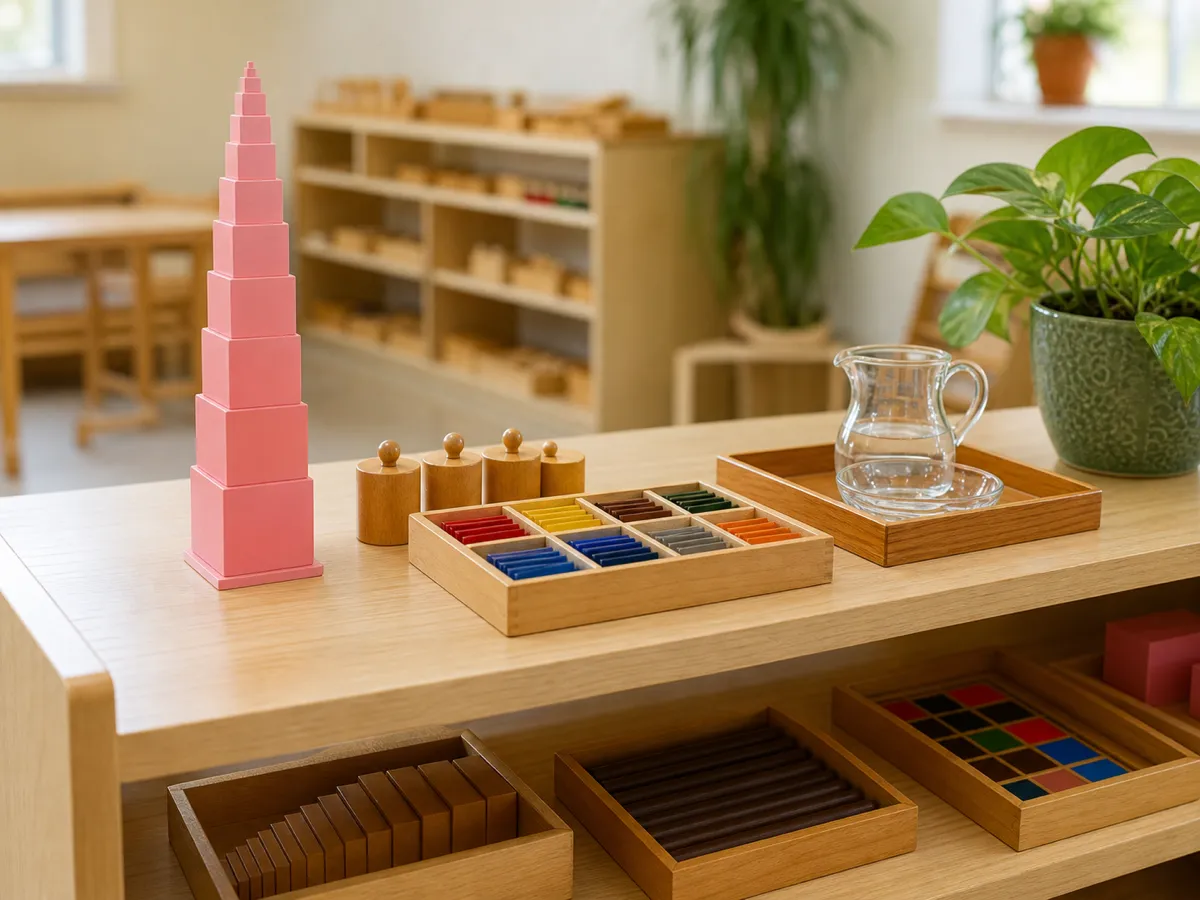
Sensorial, practical life, and early math
Students build coordination, concentration, independence, early language, and number sense through hands-on materials in a prepared 3-year cycle environment.
- Practical Life & Fine Motor Skills
- Sensorial Exploration & Geometry
- Phonics & Concrete Mathematics
 Grades 1–3
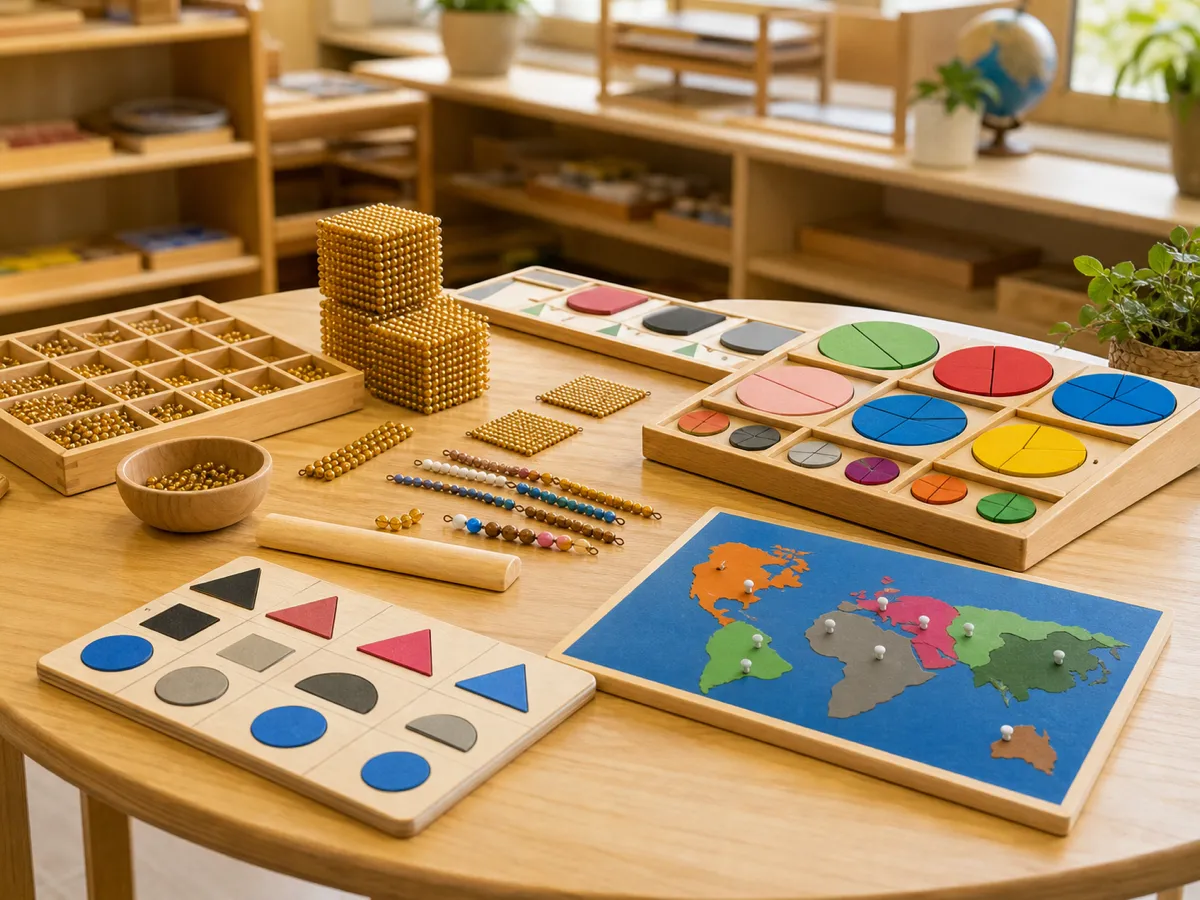
Concrete materials make big ideas visible
Beads, fractions, grammar symbols, timelines, and maps help students move from discovery toward abstract understanding.
- Cosmic Education (Five Great Lessons)
- Concrete-to-Abstract Mathematics
- Interdisciplinary Research & Grammar
 Grades 4–6
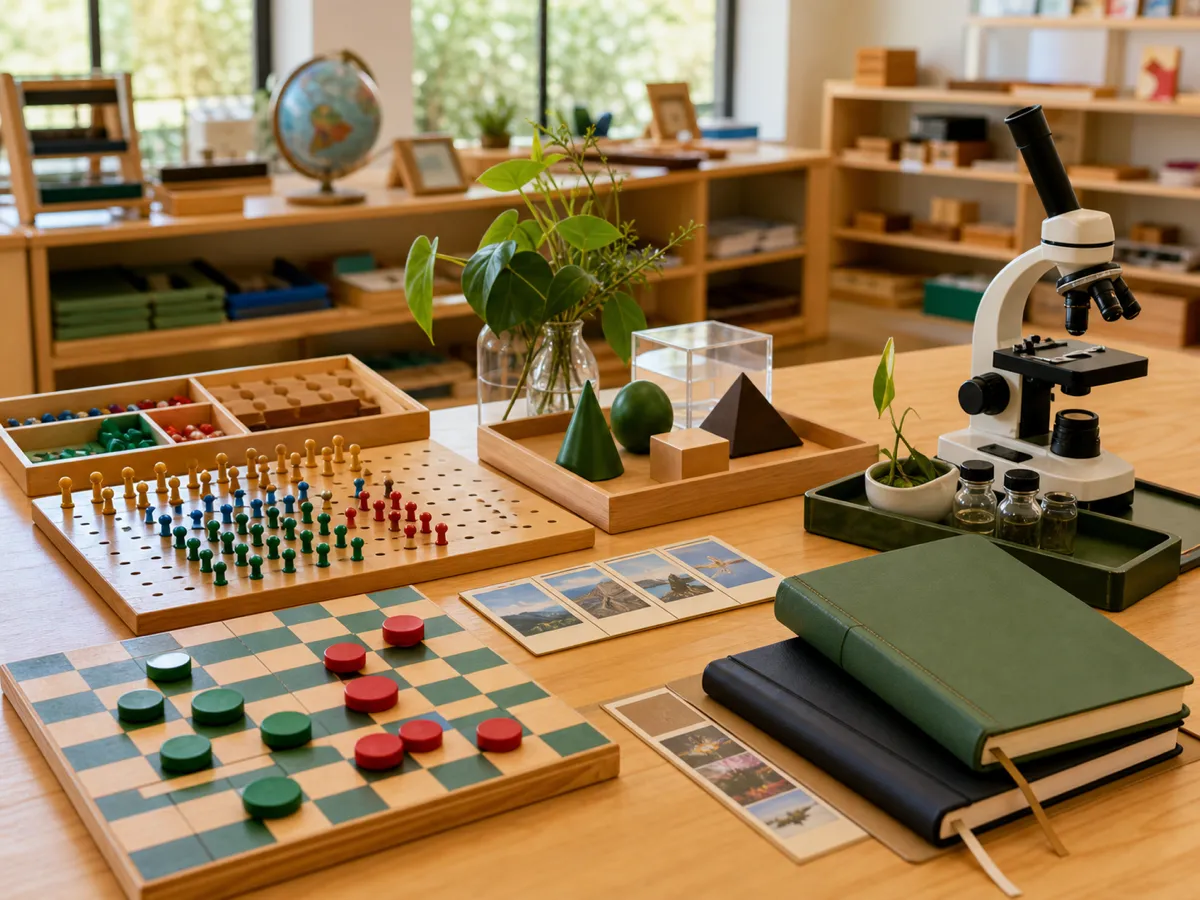
Research, reasoning, and abstract thinking
Students cultivate moral consciousness, critical thinking, advanced problem solving, and peer community self-governance.
- Advanced Math, Fractions & Geometry
- In-Depth Research & Scientific Method
- 'Going Out' Community Experiences
 Grades 7–8
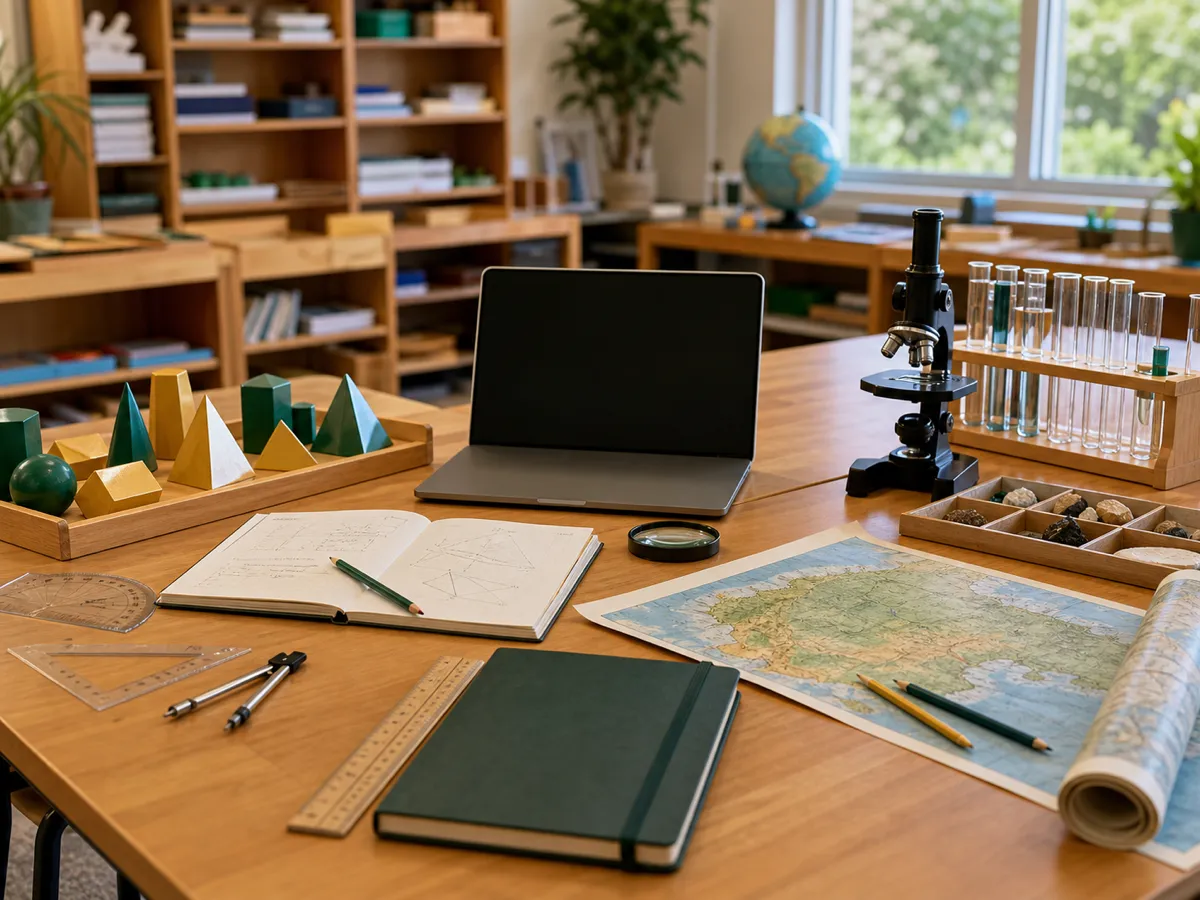
Inquiry, collaboration, and real-world application
Students connect science, design, math, mapping, writing, and project planning to practical questions and community work.
- Erdkinder Model & Micro-Economy
- Socratic Seminars & STEM Integration
- Student Leadership & High School Prep
How Children Learn
Dr. Maria Montessori described young children as having an absorbent mind. In a Montessori classroom, students learn through senses, movement, repetition, and hands-on discovery.
Montessori Materials
Montessori materials are carefully sequenced and often self-correcting. They give students immediate feedback and help organize thinking across Practical Life, Sensorial, Language, Cultural, and Math work.
Mixed-Age Groups
Multi-age classrooms let younger students observe older peers while older students practice leadership. Students move to more complex work as readiness and interest grow.
A Non-Competitive Atmosphere
Students work in relation to their own progress rather than constant comparison. This builds confidence, persistence, and internal motivation.
The Role of the Teacher
Teachers are guides and observers. They track development, introduce lessons individually or in small groups, and help students learn from experience.
What Montessori Looks Like Here
Independence
Students practice making choices, caring for materials, and taking ownership of their learning.
Concentration
Meaningful work gives students time to focus deeply and build habits of attention.
Movement
Learning is connected to the body through hands-on materials, classroom routines, and purposeful activity.
Community
Mixed-age classrooms create opportunities for peer modeling, collaboration, service, and leadership.